I got flack for it in 1999 from my ‘serious’ music-loving friends and I’ll probably get flack for it again – but I’m owning it! Back in 1999, during the genesis of the new(est) wave of boy band hysteria, LFO’s (oy, that stands for Lyte Funkie Ones) “Summer Girls” left an indelible, deliciously cheesey mark on the TRL-saturated terrain of teen pop. Sure, it was lyrically stupid and sophomoric, but it read like any teenage boy’s stupid, sophomoric love letter to his girl. And it was one of my Top 10 Singles of that year.
Sadly, Rich Cronin – lead, uh, ‘singer’ – died earlier today at the age of 35 after being diagnosed with Acute Myelogenous Leukemia in 2005. Cronin – and LFO – never again reached the highs of “Summer Girls” (though came close with the Top 10 “Girl On TV” – the video starred Cronin’s then-girlfriend Jennifer Love Hewitt) – the monumental royal battle between the Backstreet Boys vs. ‘N Sync was too mighty for the minuscule armies who attempted to reach that hierarchy, where even the semi-successful ones (e.g. the gruesome 98°) were scoffed and decimated. Cronin did appear in the short-lived 2007 Vh1 reality show MISSION: MAN BAND, which consisted of other former teen-pop boy band members and chronicled their attempt at one last shot of superstardom.
Sadly, for Cronin, it never happened, though it was said he enjoyed the ride. I’m glad. RIP, Rich. And as for “Summer Girls”, thank you for that little piece of goopy heaven.
I don’t mean to mock the death of a beloved, if somehow forgotten, 70s icon by my post’s title – I’m sure Yarnell would have gotten a kick out of it. As a child of said 70s, I remember comedy-mime husband/wife duo Shields & Yarnell all over the TV through the early 80s. From THE SONNY & CHER SHOW to THE MUPPET SHOW to the talk show circuit, they were a ubiquitous presence. Sadly, Lorene Yarnell passed away a week or so ago. Even as a child I never adhered to their brand of “comedy” (and to this day will never understand the appeal of the art of miming), but a little part of my childhood died too.
Here’s the NY TIMES obit:
Lorene Yarnell, who with Robert Shields formed the mime-and-dance comedy team Shields and Yarnell, a familiar presence on television in the 1970s, died on July 29 after suffering a brain aneurysm at her home in Sandefjord, Norway. She was 66.
The death was confirmed by Mr. Shields’s wife, Jennifer.
With Mr. Shields, her husband at the time, Ms. Yarnell starred in the variety show “Shields and Yarnell,” broadcast on CBS in 1977 and 1978. She had originally trained as a dancer, he as a mime; after meeting in the early 1970s, each learned the other’s art. Together they developed a style that was an amalgam of the two.
The result charmed many viewers, though not everyone. Reviewing the first episode of “Shields and Yarnell” in The Washington Post, Tom Shales wrote, “The premiere last week broke the scoop that even the Captain and Tennille can be out-cutesie-wootsie’d.”
In 1981 Mr. Shields and Ms. Yarnell starred in “Broadway Follies,” a musical revue at the Nederlander Theater in New York. The show received poor notices and closed after one performance.
Ms. Yarnell’s other credits include the robot Dot Matrix (with a voice supplied by Joan Rivers) in “Spaceballs,” Mel Brooks’s 1987 film comedy.
Ms. Yarnell was born in Inglewood, Calif., on March 21, 1944. After she married Mr. Shields in 1972 — the ceremony was performed in mime — the couple worked as street performers in San Francisco before breaking into television as a duo.
Mr. Shields and Ms. Yarnell divorced in the mid-1980s. Survivors include her fourth husband, Bjorn Jansson, and a brother, Richard, The Los Angeles Times reported.
I remember it so clearly, like foghorns howling in the night’s sky, those dark and simmering times…when a new disease reared its horrifying head. It was God’s punishment on the most hedonistic of lifestyles; it was the sinners getting their just rewards. It was the “gay man’s” disease, and so few cared of the potential devastation left in its demonic hands…
But AIDS wasn’t any of that or the evil verbosity spewed from the religious zealots and one would surmise that the hate-mongers would be silenced, even momentarily, when confronting the new face of the disease. One would be wrong. An innocent child merely became a victim of his hateful neighbors and became the mirror which reflected the animosity.
It’s hard to believe that it’s been over two decades since the nightmare Ryan and his family had to endure at the hands of hatred and fear, intimidation and turmoil, and the grace he and his mother displayed like a the most brilliant beacon in the darkest corridors of hell.
By wanting nothing more than to be the child he was, he begot a legacy that never should have been. But one in which humanity owes – and bestows upon – him and Jeanne.
Ryan would have been 39 years old this year. You can read about his brave life and even braver death HERE. Elton John’s friendship with Ryan and his family is also well documented, so there’s no need to reiterate that here. Yesterday, the Washington Post printed a letter from Elton to Ryan…twenty years later.
Elton John’s letter to Ryan White, 20 years after his death from AIDS
By Elton John
Sunday, April 25, 2010; B01
Twenty years ago this month, you died of AIDS. I would gladly give my fame and fortune if only I could have one more conversation with you, the friend who changed my life as well as the lives of millions living with HIV. Instead, I have written you this letter.
I remember so well when we first met. A young boy with a terrible disease, you were the epitome of grace. You never blamed anyone for the illness that ravaged your body or the torment and stigma you endured.
When students, parents and teachers in your community shunned you, threatened you and expelled you from school, you responded not with words of hate but with understanding beyond your years. You said they were simply afraid of what they did not know.
When the media heralded you as an “innocent victim” because you had contracted AIDS through a blood transfusion, you rejected that label and stood in solidarity with thousands of HIV-positive women and men. You reminded America that all victims of AIDS are innocent.
When you became a celebrity, you embraced the opportunity to educate the nation about the AIDS epidemic, even though your only wish was to live an ordinary life.
Ryan, I wish you could know how much the world has changed since 1990, and how much you changed it.
Young boys and girls with HIV attend school and take medicine that allows them to lead normal lives. Children in America are seldom born with the virus, and they no longer contract it through transfusions. The insults and injustices you suffered are not tolerated by society.
Most important, Ryan, you inspired awareness, which helped lead to lifesaving treatments. In 1990, four months after you died, Congress passed the Ryan White Care Act, which now provides more than $2 billion each year for AIDS medicine and treatment for half a million Americans. Today, countless people with HIV live long, productive lives.
It breaks my heart that you are not one of them. You were 18 when you died, and you would be 38 this year, if only the current treatments existed when you were sick. I think about this every day, because America needs your message of compassion as never before.
Ryan, when you were alive, your story sparked a national conversation about AIDS. But despite all the progress in the past 20 years, the dialogue has waned. I know you would be trying to revive it if you were here today, when the epidemic continues to strike nearly every demographic group, with more than 50,000 new infections in the United States each year. I know you would be loudly calling for the National HIV/AIDS Strategy that was promised by President Obama but has not yet been delivered. I know you would reach out to young people. I know you would work tirelessly to help everyone suffering from HIV, including those who live on the margins of society.
It would sadden you that today, in certain parts of the United States, some poor people with AIDS are still placed on waiting lists to receive treatment. It would anger you that your government is still not doing enough to help vulnerable people with HIV and populations that are at high risk of contracting the virus, including sexually active teenagers. It would upset you that AIDS is a leading cause of death among African Americans.
It would frustrate you that even though hundreds of thousands of HIV-positive Americans are receiving treatment in your name, more than 200,000 don’t know their HIV-positive status, largely because a lingering stigma surrounding the disease prevents them from being tested. It would disappoint you that many teenagers do not have access to science-based HIV-prevention programs in school, at a time when half of new infections are believed to be among people under 25.
I miss you so very much, Ryan. I was by your side when you died at Riley Hospital. You’ve been with me every day since. You inspired me to change my life and carry on your work. Because of you, I’m still in the struggle against AIDS, 20 years later. I pledge to not rest until we achieve the compassion for which you so bravely and beautifully fought.
James Montgomery of MTV News remembers the loss of the idealism of youth.
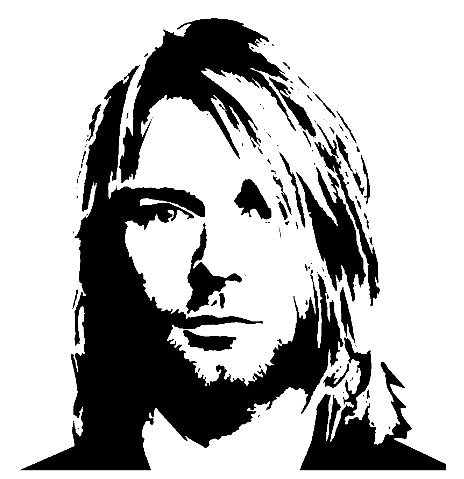
Kurt Cobain: The Death Of The Scruffy Noble
Nirvana frontman represented the honor that came with never compromising, whether he liked it or not, in Bigger Than the Sound.
By James Montgomery
Fifteen years ago today, an electrician named Gary Smith was sent out to a gray clapboard home near Lake Washington in Seattle to install a security system. What he discovered, in the greenhouse above the garage, would change the face of rock and roll forever. It was the body of Kurt Cobain.
The Nirvana frontman had been missing for several days, after fleeing a rehab facility in Los Angeles. His mother, Wendy O’Connor, had filed a missing-persons report with Seattle police, advising them to look in Capitol Hill, where Cobain may have been attempting to score drugs. In actuality, he was already holed up in his Lake Washington home, in the greenhouse above the garage, where on the morning of April 5, he removed his hunting cap – which he wore when he didn’t want people to recognize him – tossed his wallet on the ground, wrote a one-page suicide note to an imaginary childhood friend named “Boddah” and ended his life with a 20-gauge shotgun blast to the temple.
Three days later, sometime around 9 a.m. PT, Smith discovered Cobain’s body. He called police (and a local radio station), and then there were the breaking-news bulletins and the vigils and the questions and the tears. And then it was all over.
Not the remembrances or the hand-wringing or even the speculation about Cobain’s death, mind you … that all continues to this day, in voluminous tomes and box sets and documentaries and the like. Rather, April 8 marked the end of an ideal, of a movement. That sounds hokey, but if I’ve learned anything in the 15 years since his exit, it’s this: When Cobain left, he took a lot more with him than just Nirvana.
This isn’t another piece meant to codify Cobain (or his band) or measure the length of their musical shadows. Suffice to say, Nirvana released three studio albums, and all of them rip. And Cobain possessed a growl that could crumble walls and a wail that could cut glass (to say nothing of his songwriting or his underappreciated sense of melody). Everyone knows this. Nirvana were probably our Beatles. Cobain was probably our John Lennon. Let’s move on.
What I want to talk about was everything that Cobain symbolized, whether he liked it (or most likely didn’t). He was hope, he was heft. He was the everyman, the end of the rock star, the punk dream realized. He had made it, and he was going to lift people up with him. He was cynicism and venom. He represented idealism and truth and the honor that came with never compromising. When he lived, rock music had importance, it had vitality. It was very possible that his songs could change the world. There was a scruffy nobility to him.
Of course, it is entirely possible that he was just the right man at the right time. Nobody represented the idealistic (and, at the same time, nihilistic) ’90s like Cobain did. But if you noticed, when he died, all that idealism, all that hope, all that import seemed to die with him. The very idea that a band (or a man) can change the world with music now feels beyond laughable. We have become scarred and jaded. A lot of us are no longer willing to believe in the power of a guitar or a lyric, because Cobain took that with him 15 years ago.
And that’s sad, because no matter what Cobain was, no matter what he symbolized or who he inspired, he was ultimately just a man. He had demons that proved too strong and too numerous, and they ganged up on him and dragged him away. And that taught us a lesson: Don’t deify, because you’ll just end up betrayed. We’ve spent 15 years doing the complete opposite – we no longer build up, we tear down. We don’t believe in things. We no longer strive for truth or subscribe to any particular ethos. Probably because we’re afraid to.
Two years ago, on the eve of his 40th birthday, I interviewed a host of people who knew Cobain well and asked them what he’d be doing if he were still alive. They said he would’ve retreated from public view (perhaps to a desert, as Butch Vig surmised); made deeply personal, decidedly anti-commercial music; and despised the way our society had turned out. I tend to agree with all that. It’s difficult (if not impossible) to imagine Cobain alive today … at least not the way we all remember him. He just wouldn’t fit. He couldn’t.
I was in 10th grade when the news broke. I remember watching Kurt Loder read the emerging details of Cobain’s death on TV, and I remember watching the vigils in the Seattle Center park, and I remember being very sad. At the time, I think it was because of the loss of our great and noble leader and the shuddering of an entire generation. Now, I realize it was because a little piece of me died that day too.
I lost the idealism of youth. And the idealism that comes with plugging in a guitar and playing it very loudly (and very badly). That’s never going to come back, either. Probably for any of us.
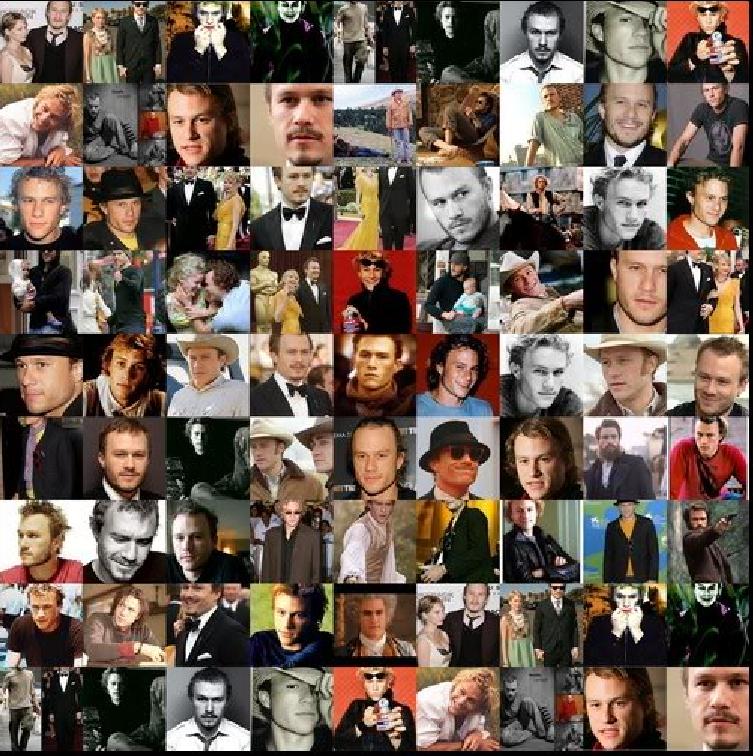
I was thinking about Heath Ledger today while watching his portrait on the Biography Channel and decided to repost something I had written on the day he died, a little over a year ago, on my now-defunct Myspace blog…I know the truth of how he died has since been revealed (accidental overdose on prescription medication) but at the time, the gossip bloodhounds had a field day, as they always do but I was just saddened by the death of a great, young actor.
Word of mouth out of Hollywood, even before its release, was that Ledger was a shoo-in for an Oscar nod for “The Dark Knight”. Insiders reveled that not since Anthony Hopkins seared the screen as Hannibal Lechter has a film villain been so diabolical, so nonchalant in the human pursuit of evil. That the hype sustained the truth is testament to Ledger. His Joker is an archetype, a new paradigm in cinematic villains.
Also, as of that writing I had only seen “Brokeback Mountain” once, and thought it was a fine film, but not so quick to jump on the ‘masterpiece’ bandwagon. It is only in revisiting it do I truly understand its depth and beauty and, yes, I could see why people (Jake Gyllenhaal’s creepy performance notwithstanding) would call it a ‘masterpiece’.
January 22 2008
Heath Ledger Current mood: melancholy Category: Movies, TV, Celebrities
A revelatory, astonishing performance by a soon-to-be great actor in a good-not-great film. That’s what I said when I first saw Heath Ledger in ‘Brokeback Mountain.’ So few times in my film-going life had I witnessed a performance of such visceral implosion – a man bleeding inside out from inner torment. In an improved more cohesive world, Ledger would have walked the stage and accepted a most deserved Oscar that year.
As you all heard, Ledger died a few hours ago, and I only hope it wasn’t due to drug abuse, which has been hinted at, or suicide – that would only prove his cowardice. I feel sadness for his daughter and ex-wife (especially if it were drug use), but my tolerance remains quite low for suicides and overdoses due to recreational drug use (no sympathy whatsoever for that kind of overdose, actually – you know what the risks are), especially when children are involved.
Something struck me when I heard the news. I’m not sure why it affected me – not since River Phoenix died almost 15 years ago (of an overdose, no less) has an actor’s death made me stop and take a deep breath. Here was a man not privy to the gossip hounds, nor a usual staple in the tabloids eighth level of hell. Not much on the radar in Perez Hilton’s subhuman swill pool (and he, after all, is the gatekeeper to that eighth level of hell).
Sure, the gays loved him because of ‘Brokeback’ and I often wonder how many gay men would really care all that much of his passing if he never starred in that film or if he didn’t possess such a manly beauty.
But lovers of film in general knew him as a raw talent – as an actor, he seemed to come from another time, where and when actors delved into their psyche to explore the human remains, no matter how dim-witted the film or revolutionary the project. Here was a talent that would stand with the greats in time. Just like Marlon Brando and Sean Penn, he wasn’t transient. He was that good.
I actually believe that. And now, I’ll never know. And that’s partly why it affected me so. I mean, actors and actresses die all the time, but so few so young. And even fewer so talented. We will never know.
What a loss for true film fans. This is a music video directed by Ledger. It’s for Ben Harper’s “Morning Yearning” and proves that Ledger also had an instinct for directing.
I will never know. We will never know.
My fingers touch upon my lips
It’s a morning yearning
It’s a morning yearning
Pull the curtains shut try to keep it dark
But the sun is burning
The sun is burning
The world awakens on the run
And we’ll soon be earning
We’ll soon be earning
With hopes of better days to come
That’s a morning yearning
Morning yearning
Morning yearning…
Another day another chance to get it right
Must I still be learning?
Must I still be learning?
Baby crying kept us up all night
With her morning yearning
With her morning yearning
Morning yearning…
Like a summer rose I’m a victim of the fall
But am soon returning
Soon returning
You’re love’s the warmest place the sun ever shines
My morning yearning
My morning yearning




 My New Boyfriend